AARO, Grusch, and the Disclosure Timeline — Mapped
The standard disclosure narrative goes like this: Grusch filed a complaint, Congress held hearings, AARO investigated, and now we wait.
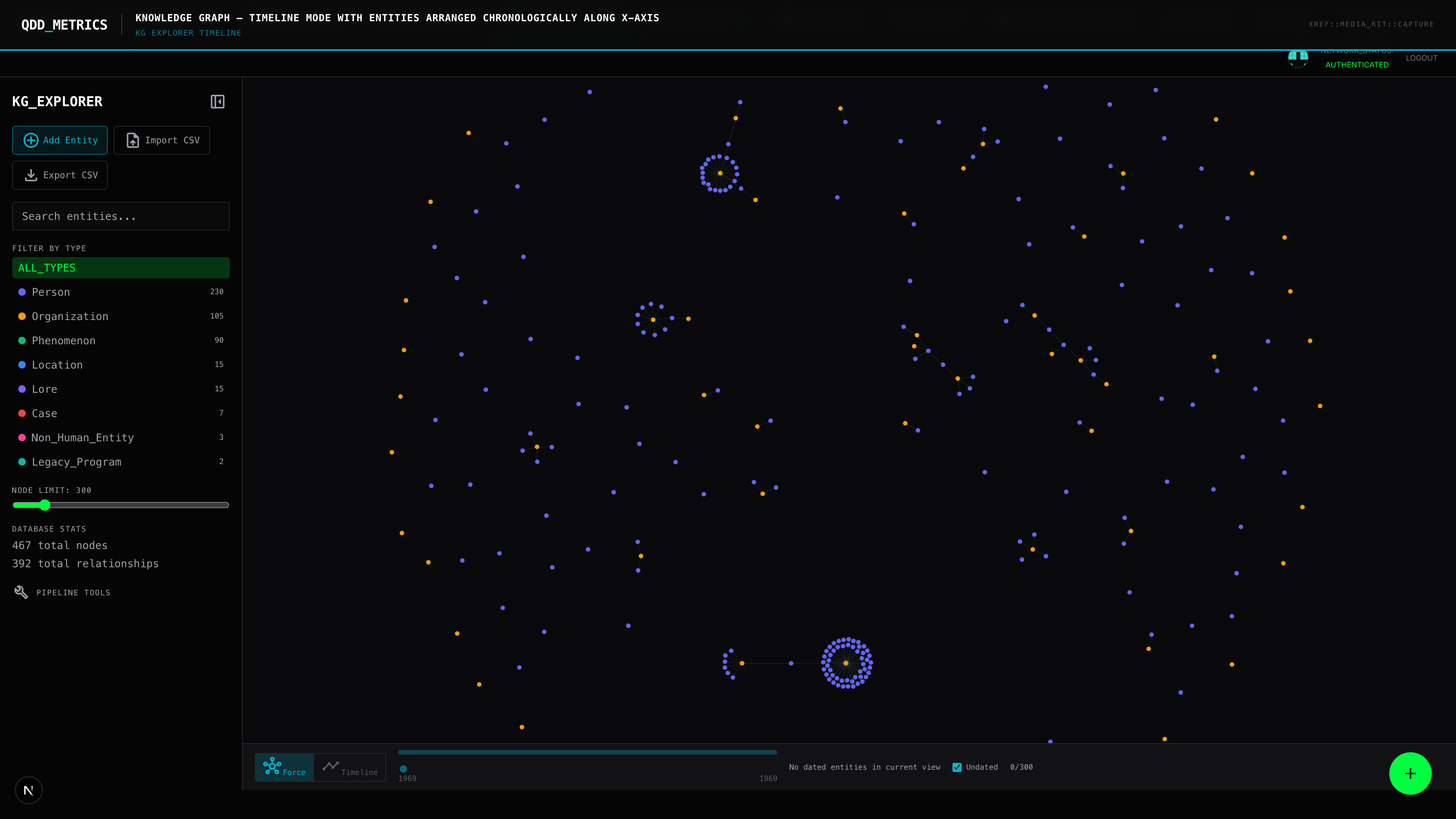
That narrative is wrong. Not because any single fact is incorrect — but because it treats a network as a line. The real disclosure timeline is a graph. QDD maps it.
Before Grusch: The Institutional Prehistory
The current disclosure wave didn't start with David Grusch's 2023 public testimony. It started decades earlier, through a chain of institutional decisions that created the conditions for a whistleblower to emerge.
2007-2012: AATIP. The Advanced Aerospace Threat Identification Program, run out of DIA under the direction of Luis Elizondo, represents the first confirmed modern DOD UAP investigation. Funded through a congressional earmark secured by Senator Harry Reid. Budget: $22 million. Classification: UNCLASSIFIED/FOUO — a detail that matters enormously for FOIA purposes.
2017: The New York Times Disclosure. Leslie Kean, Ralph Blumenthal, and Helene Cooper publish the story that breaks the modern UAP taboo. Three Navy videos. Confirmation of AATIP's existence. Elizondo goes public. The overton window cracks open.
2020: UAPTF. The Unidentified Aerial Phenomena Task Force is established under the Office of Naval Intelligence. A bureaucratic successor to AATIP with more institutional backing and less independence.
2022: AARO. The All-domain Anomaly Resolution Office launches under Dr. Sean Kirkpatrick. Reports to the Under Secretary of Defense for Intelligence & Security. Congressional mandate. Public-facing. Controversial from day one.
The Grusch Inflection
In June 2023, David Grusch — a former intelligence official with NGA and NRO experience who served on the UAP Task Force — goes public with allegations of a multi-decade crash retrieval and reverse engineering program.
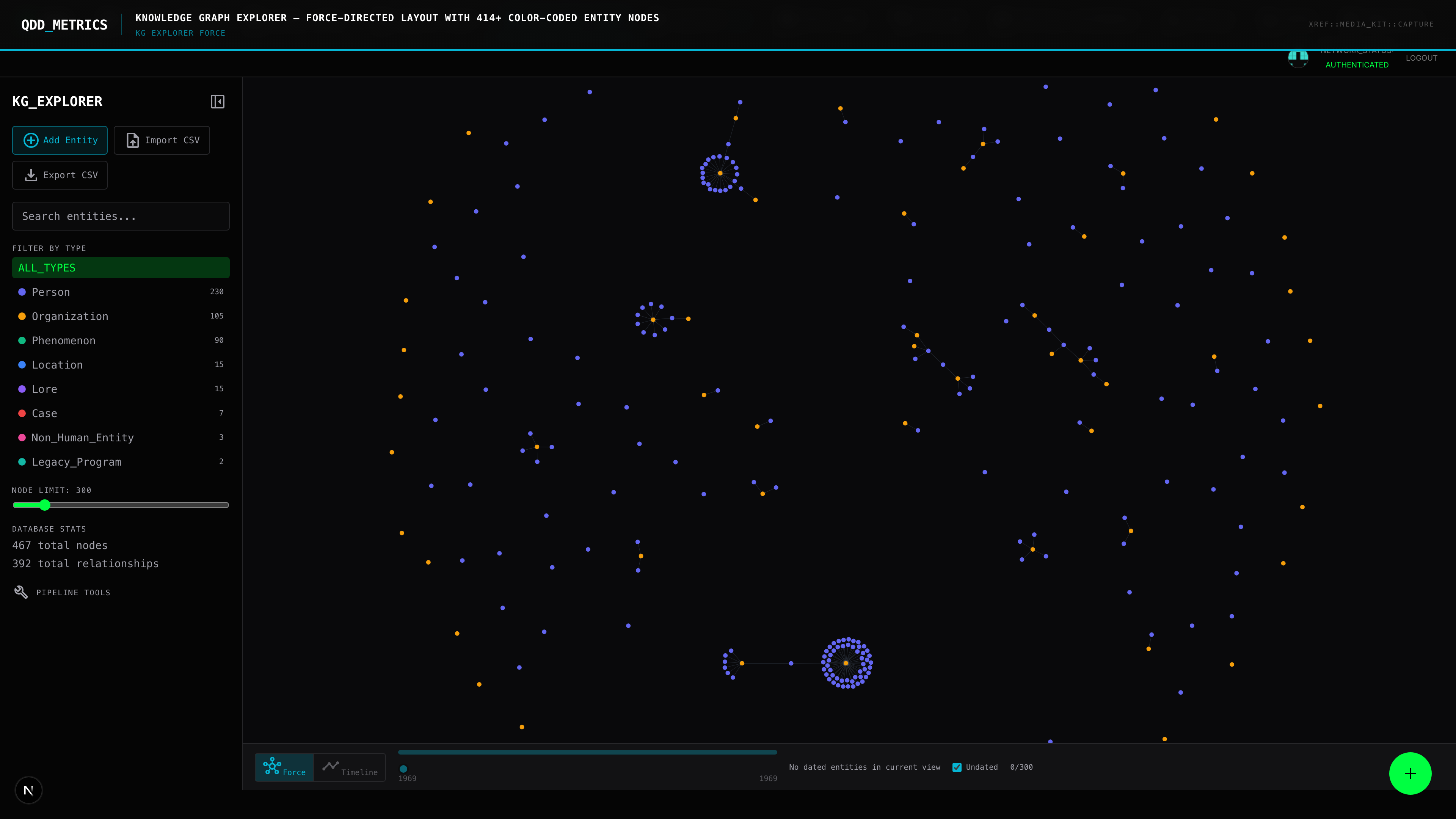
Key details from the QDD knowledge graph:
The ICIG Pathway. Grusch filed his complaint through the Intelligence Community Inspector General, who found it "credible and urgent." This is a formal institutional judgment, not a media assessment.
The Retaliation Pattern. Grusch alleged professional retaliation after his ICIG filing. QDD tracks the entities involved in both the complaint and the alleged retaliation — revealing institutional connections between them.
The Congressional Briefing Chain. Grusch briefed members of both the Senate Intelligence Committee and the House Oversight Committee. QDD maps which legislators received briefings, when, and what legislative actions followed.
AARO's Counter-Narrative
AARO under Kirkpatrick published a two-volume historical review concluding there was no evidence of crash retrieval programs or reverse engineering efforts. The report directly contradicted Grusch's allegations.
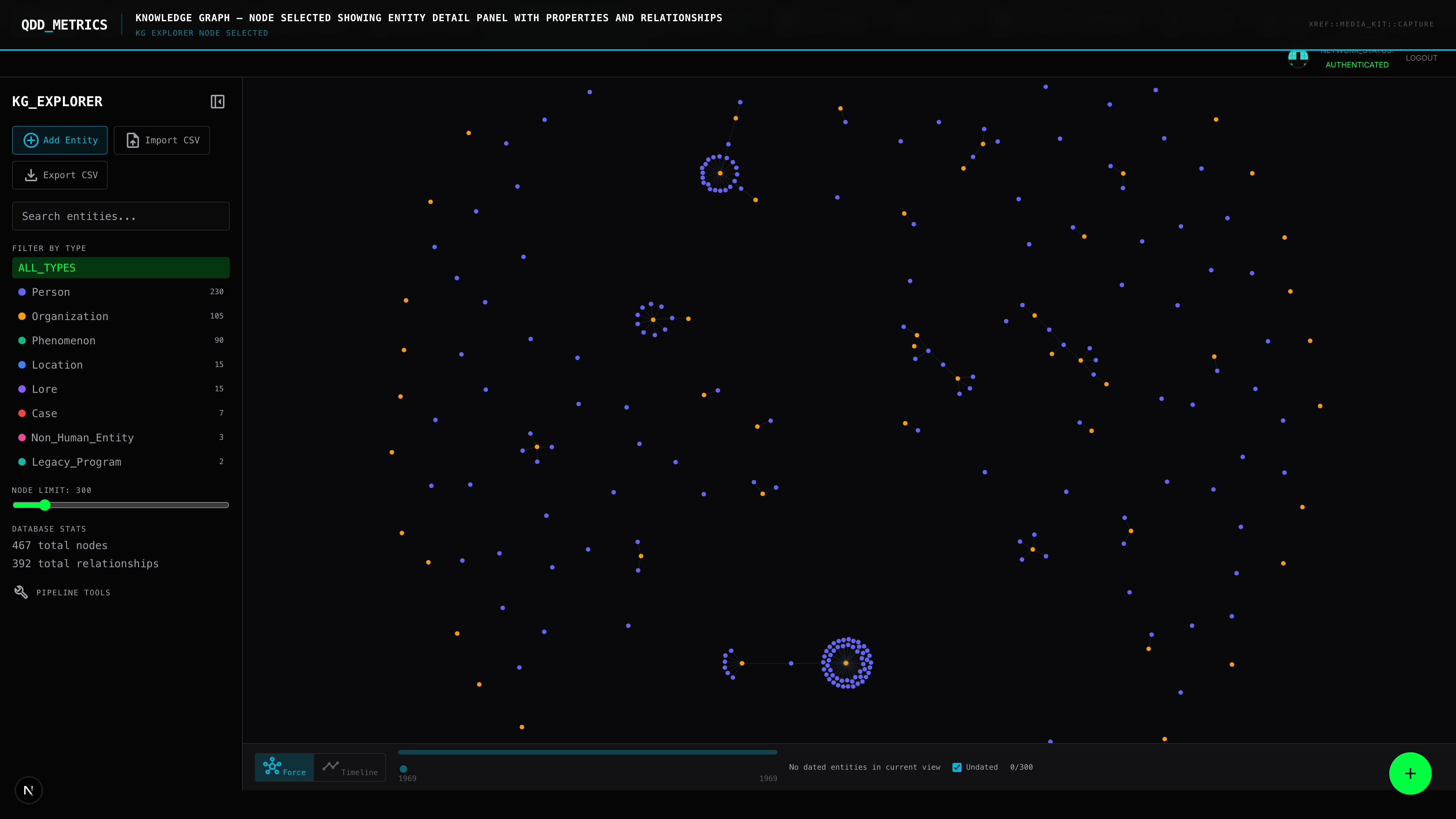
The knowledge graph reveals something the report doesn't address: the personnel overlap between AARO and the programs Grusch alleges were involved in retrieval operations. Multiple second-order connections exist between AARO leadership and entities named in both Grusch's ICIG complaint and historical DIA/DOE documentation.
This doesn't prove misconduct. It does prove the conflict of interest question is structurally substantive — not a conspiracy theory.
The Congressional Fork
After Grusch's testimony, the legislative response split into two tracks:
Senate Track. Schumer and Rounds introduce the UAP Disclosure Act as an amendment to the FY2024 NDAA. Modeled on the JFK Records Act. Eminent domain provisions for retrieved materials. Killed in House conference under pressure from Representatives Mike Turner and Mike Rogers — both with significant defense contractor constituency ties visible in QDD's graph.
House Track. Burchett, Luna, and Moskowitz push for continued hearings and subpoena authority. The House Oversight UAP hearings become the most-watched congressional proceedings on the topic in history.
Why the Timeline Matters
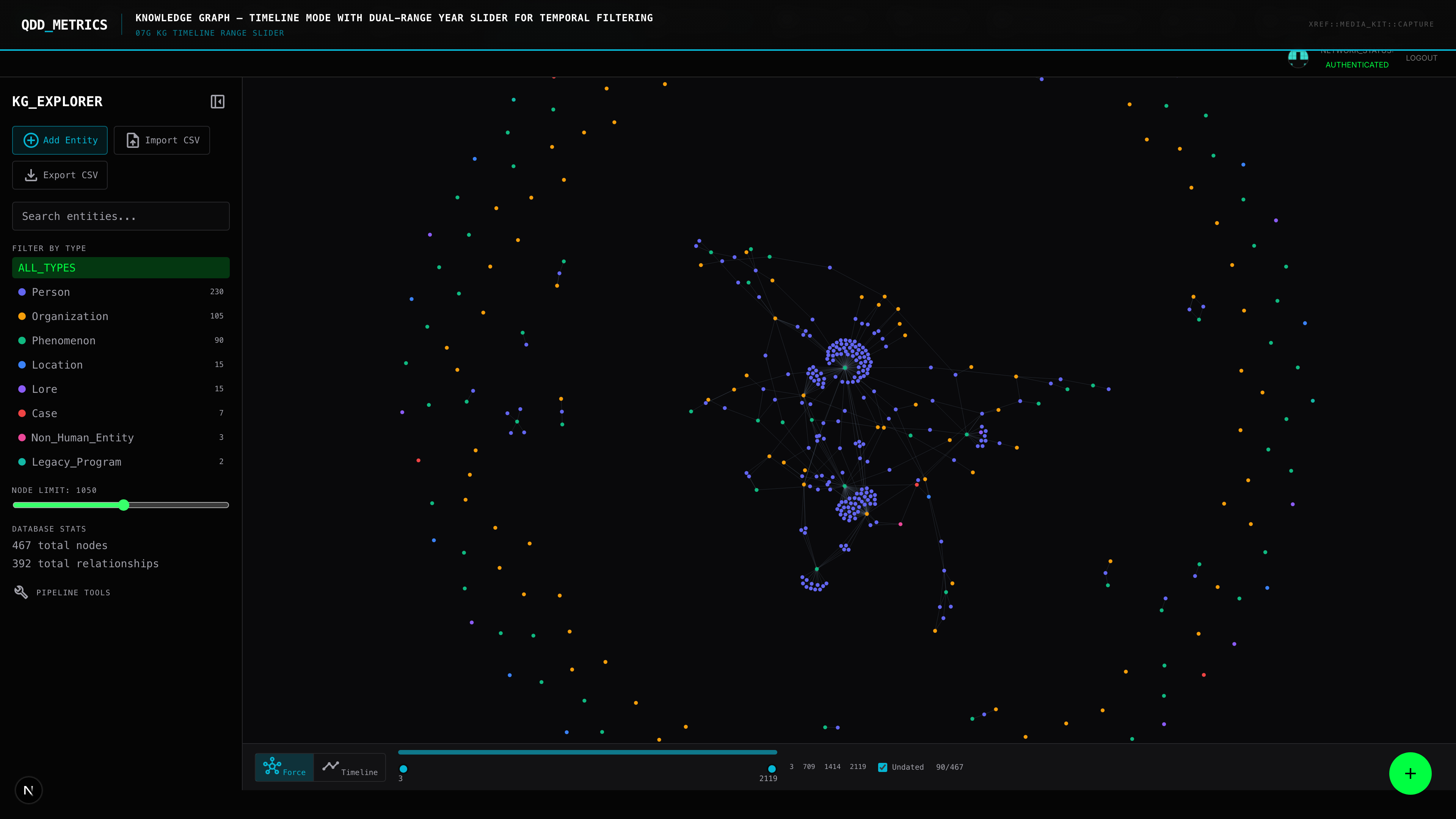
Every disclosure advocate and every skeptic tells a different version of this timeline. QDD doesn't tell a version. It maps the documented connections and lets the structure speak.
The graph is live. The timeline updates as new events, documents, and testimony enter the system.
The question isn't whether disclosure is happening. It's whether you can see the shape of it.
Now you can.